Table of Contents
- Understanding Neurofeedback Therapy in San Diego, California
- Basics of Neurofeedback Therapy
- In-Depth Exploration of Neurofeedback Techniques
- Applying Neurofeedback in Daily Mental Health Practice
- Advanced Neurofeedback Applications for Complex Needs
- Frequently Asked Questions About Neurofeedback
- Next Steps in Your Neurofeedback Journey
Understanding Neurofeedback Therapy in San Diego, California
At Freedom Within Therapy and Wellness Center, we believe in the remarkable plasticity of the brain to support mental health recovery, especially for adults and military-connected clients facing challenges like anxiety and trauma in San Diego. Neurofeedback therapy in San Diego, California, offers a promising path toward greater emotional balance without relying on medication.
Neurofeedback therapy is a non-invasive form of biofeedback that uses EEG sensors to monitor brainwaves in real time, providing gentle feedback to help train self-regulation. This brainwave training for trauma has shown evidence-based benefits for conditions such as PTSD and anxiety, empowering individuals to achieve calmer states naturally. We integrate EEG feedback for anxiety management alongside our holistic services, drawing on person-centered principles and person centered therapy in San Diego to foster client empowerment and growth.
In San Diego, we offer neurofeedback in San Diego through compassionate, inclusive care tailored by our multidisciplinary team of licensed clinicians, including LCSWs and LMFTs. Our expertise combines neurofeedback with EMDR and cognitive behavioral techniques, available via secure in-person sessions at our facilities or telehealth across California for added flexibility. For military support, neurofeedback for PTSD helps veterans navigate their unique journeys.
This guide explores neurofeedback fundamentals, from mechanisms to integration with our trauma-informed approach, along your journey towards achieving freedom within. We look forward to working with you—book an appointment through our client portal to learn more about how we can support your wellness.
Basics of Neurofeedback Therapy
At Freedom Within Center, we offer neurofeedback therapy in San Diego, California, as a powerful tool for supporting mental health. This non-invasive approach, often called biofeedback brain training, helps individuals regulate brain activity to address issues like anxiety and stress. Rooted in neuroscience, neurofeedback emerged in the 1960s with early EEG studies showing how people could learn to control brainwaves. Today, it’s integrated into trauma-informed care, drawing on neural regulation techniques to promote balance in the nervous system. As part of our holistic services, we combine it with counseling to guide clients along their journey towards achieving freedom within.
Definition and History
Neurofeedback therapy involves monitoring and training brainwaves using electroencephalography (EEG) technology. It empowers clients to achieve calmer states by providing real-time feedback on brain activity. Historically, pioneers like Barry Sterman in the mid-20th century demonstrated that animals and humans could self-regulate brain functions through operant conditioning. By the 1970s, clinical applications expanded to treat conditions like epilepsy and ADHD. In modern practice, especially for adults and veterans, it supports emotional regulation without medication. We at Freedom Within Center incorporate this evidence-based method to complement our trauma therapy offerings, emphasizing its evolution into accessible wellness tools.
How It Works
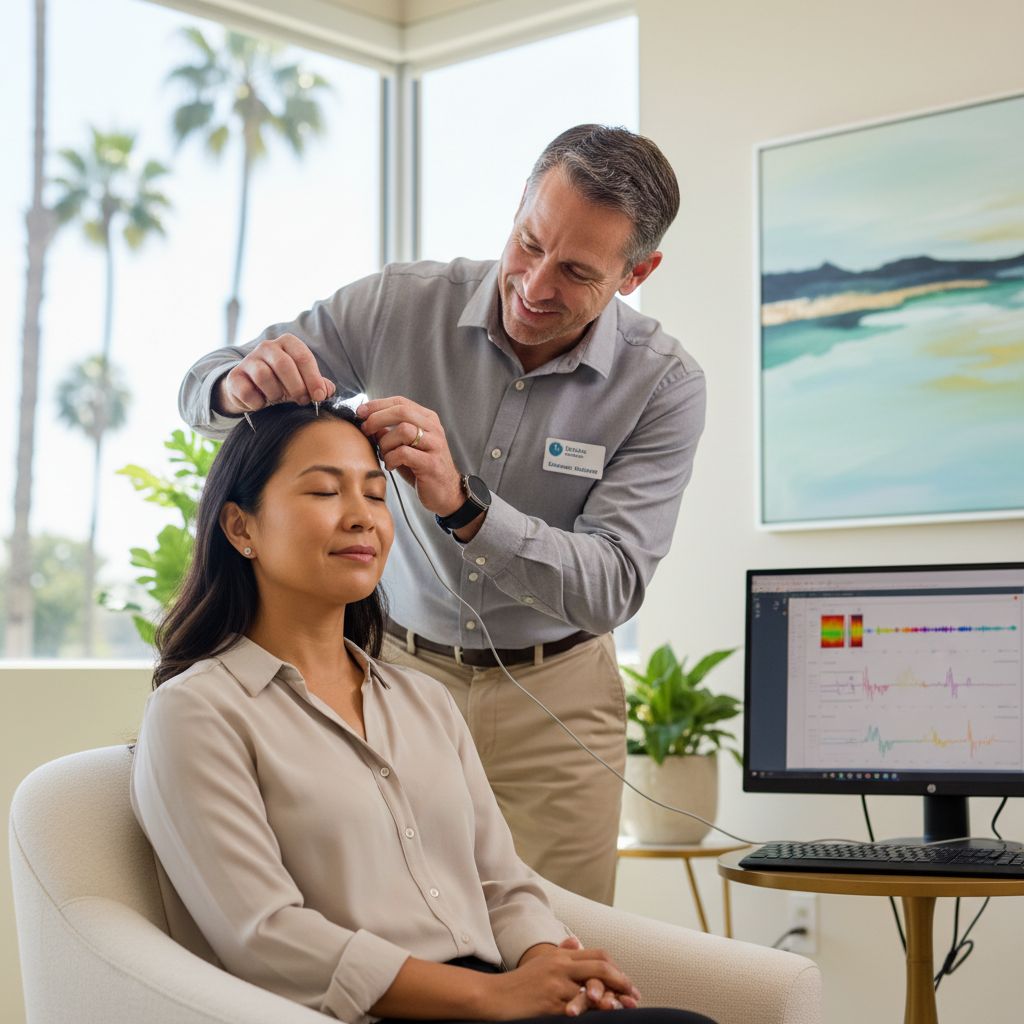
Neurofeedback sessions begin with an initial assessment to map brain activity, ensuring personalized protocols. Clients sit comfortably while sensors are placed on the scalp to detect electrical signals via EEG. The system then displays feedback through games or visuals—think a ball rising on screen when desired brainwaves increase—encouraging the brain to adapt. This process leverages neuroplasticity, the brain’s ability to rewire itself, as noted in studies from Unlocking the Brain in Counseling Today. Sessions last 30-60 minutes, typically twice weekly for several months, with progress tracked through quantitative EEG.
Understanding brainwave types is key to grasping this process. Different frequencies correspond to mental states, and neurofeedback targets imbalances for better regulation.
| Aspect | Neurofeedback Therapy | Traditional Talk Therapy |
|---|---|---|
| Brainwave training via EEG feedback | 30-60 minutes of monitoring | N/A |
| Real-time brain regulation | Passive viewing of feedback games | Active dialogue |
These patterns, sourced from EEG research, highlight how targeted training can foster equilibrium. For instance, increasing alpha waves aids in shifting from sympathetic ‘fight or flight’ to parasympathetic ‘rest and digest’ states.
Following brainwave training, neurofeedback complements traditional methods seamlessly. At our center, we often pair it with talk therapy to address both physiological and emotional layers of trauma, offering a comprehensive path for San Diego clients.
| Protocol | Target Conditions | Session Focus | Duration |
|---|---|---|---|
| Alpha-Theta Training | PTSD, Anxiety | Relaxation Enhancement | 20-40 sessions |
| SMR Training | Attention Issues | Sensorimotor Rhythm | 30-50 sessions |
This comparison shows neurofeedback’s unique emphasis on direct neural changes, making it suitable alongside talk therapy. For PTSD and anxiety, meta-analyses like the PMC review indicate EEG-neurofeedback may reduce symptoms by up to 30-50% in some studies, though results vary. It’s particularly helpful for veterans experiencing hyperarousal, where talk therapy builds coping skills while neurofeedback calms overactive responses. We tailor this integration based on individual needs, ensuring no one-size-fits-all approach.
In exploring these mechanisms, it’s clear how neurofeedback supports broader mental wellness. Clients often report improved focus post-training, transitioning smoothly into daily life.
Benefits Overview
Evidence suggests neurofeedback aids anxiety management by enhancing self-regulation, with studies showing reduced cortisol levels and better emotional control. For stress, it promotes resilience without side effects common in medications. We highlight these general benefits ethically, noting variability in responses—some see improvements in weeks, others over months. Integrated with our nutrition guidance, it fosters holistic healing. Importantly, it’s non-directive, allowing the brain to learn naturally, which aligns with our compassionate care philosophy.
Local Considerations in San Diego
In San Diego, neurofeedback sessions occur in our welcoming center or via telehealth for California residents. We use secure remote EEG equipment, enabling access from anywhere in the state through our client portal. Prerequisites include a brief intake to discuss goals, like neurofeedback for PTSD among veterans. Our team, including the best therapists in San Diego, coordinates with Tricare for eligible clients. This flexibility ensures inclusive support, whether in-person or virtual, as we look forward to working with you toward lasting calm.
In-Depth Exploration of Neurofeedback Techniques
At Freedom Within Therapy and Wellness Center, we specialize in advanced brain training methods to support those navigating trauma and anxiety. Neurofeedback therapy in San Diego, California, offers a non-invasive way to help regulate brain activity, particularly for conditions like PTSD. In this section, we explore the techniques we use, backed by research and integrated into our compassionate care.
Neurofeedback Protocols for Trauma and Anxiety
Our protocols for trauma and anxiety begin with an initial assessment to tailor sessions to individual needs, focusing on trauma-specific EEG protocols that promote self-regulation. For PTSD and stress, we often employ alpha-theta training, where sensors are placed on the scalp to monitor brainwaves. Clients receive real-time audio or visual feedback, such as calming sounds or images, to encourage a relaxed state and process emotional memories. In contrast, sensorimotor rhythm (SMR) training targets focus and arousal regulation, with sensors over the central brain regions to enhance stability during anxiety triggers.
At our center, we select protocols based on evidence-based guidelines and client goals, prioritizing those validated for veterans through VA recommendations. We adapt them for telehealth using portable EEG devices, ensuring accessibility across California.
The following table compares common neurofeedback protocols we incorporate in San Diego practices:
| Aspect | In-Person (San Diego) | Telehealth (California) |
|---|---|---|
| Full EEG setup at center | Standard Facility | Statewide via secure portal |
| Session Comfort | Office environment | Home-based with guidance |
Alpha-theta training suits veterans by fostering deep relaxation to address hypervigilance, while SMR helps with concentration amid trauma-related distractions. Drawing from VA biofeedback guidance and APA clinical insights, these protocols enhance nervous system regulation without overwhelming the client. We find alpha-theta particularly effective for emotional processing in our sessions, complementing other therapies for lasting support.
Evidence from Clinical Studies
Research on neurofeedback for PTSD highlights its potential as a supportive tool. A systematic review from PubMed sources analyzed EEG-neurofeedback, finding moderate to large effects in reducing symptoms compared to passive controls, though evidence quality remains low due to study limitations like small samples. For anxiety, studies show improvements in brain connectivity, but active controls are needed for stronger validation.
VA guidance endorses biofeedback integrations for veterans, noting benefits in stress management without overstating outcomes. APA articles emphasize ethical use, combining neurofeedback with therapies like EMDR for better results. Overall, while promising, we stress that neurofeedback aids mental health journeys alongside professional guidance—no single approach guarantees relief.
Integration with Holistic Services
Neurofeedback seamlessly complements our multidisciplinary approach at Freedom Within, enhancing individual counseling and group workshops. For instance, we pair it with EMDR to deepen trauma processing; after a neurofeedback session calming the nervous system, EMDR targets memories more effectively. Nutrition counseling supports this by addressing inflammation linked to anxiety, with our registered dietitians recommending omega-3s to bolster brain health.
In our San Diego workshops, neurofeedback in San Diego introduces advanced techniques alongside mindfulness exercises, fostering community for veterans. A therapist in San Diego, California on our team, trained in these modalities, guides integrations to ensure cohesive care.
To illustrate synergies, consider this comparison of neurofeedback with other modalities:
| Condition | Typical Sessions | Integration Notes |
|---|---|---|
| PTSD | 20-40 | Enhanced regulation with EMDR |
| Anxiety | 15-30 | Holistic support with Nutrition |
EMDR pairs well by leveraging neurofeedback’s relaxation for safer reprocessing, supported by studies showing symptom reductions. CBT benefits from improved attention, though evidence is emerging. We integrate these in telehealth and in-person sessions, offering nutrition guidance to sustain gains.
Along your journey towards achieving freedom within, neurofeedback for PTSD becomes a powerful ally when woven into holistic plans. Our workshops, like the Anxiety Series, include brain training demos, while veteran services coordinate with VA for comprehensive support. This blended model addresses mind, body, and spirit, emphasizing inclusive, compassionate care without promises of quick fixes. We look forward to working with you to explore these options—book an appointment to discuss how they fit your path.
No information on this website is a substitute for professional psychological, psychiatric, or medical advice; consult a qualified professional.
Applying Neurofeedback in Daily Mental Health Practice
At Freedom Within Center, we believe neurofeedback offers a powerful tool for enhancing mental well-being, especially for clients navigating anxiety, PTSD, or life transitions in San Diego and beyond. Our approach integrates this innovative technique into everyday practice, whether through in-person sessions or convenient telehealth options across California. We guide you every step, ensuring a supportive experience tailored to your needs.
Preparing for Your First Session
Embarking on neurofeedback therapy in San Diego, California, starts with a smooth preparation process designed to ease any initial concerns. We begin with a pre-session consultation via our secure client portal, where you complete simple paperwork and share your goals, such as managing stress or building resilience. This step helps us understand your background, including any perinatal adjustments or couple dynamics you might want to address.
To make things comfortable, arrive relaxed—wear comfortable clothing and consider light snacks if sessions are in the morning. We always encourage questions like, “What equipment will be used?” or “How do I prepare my space for telehealth?” Our team provides clear answers, reassuring you that variability is normal and progress unfolds at your pace.
The following table outlines the typical phases of your first session, drawing from our established protocols for practical brain feedback sessions:
| Phase | Description | Duration |
|---|---|---|
| Intake | Reviewing goals and history | 15 mins |
| Training | Active EEG feedback session | 30 mins |
This structure ensures a focused yet flexible start, allowing time for any adjustments. For instance, veterans seeking neurofeedback for PTSD might include a quick review of prior therapies. Remember, no two sessions are identical, and we prioritize your comfort throughout. If insurance questions arise, we assist with Tricare coordination ethically, noting that coverage varies—always verify with your provider.
Session Structure and Techniques
Once prepared, our neurofeedback sessions follow a clear flow that builds confidence and clarity. We start with a brief intake to check in on your week, then move into the core applied neural training phase. Here, you’ll interact with real-time feedback through calming visuals or sounds, guiding your brain toward balanced patterns over 20-30 minutes. This non-invasive process helps regulate responses, particularly beneficial for neurofeedback in San Diego in-person setups.
For remote formats, we adapt seamlessly using our portal’s secure video link, ensuring the same level of engagement. Post-training, we review insights together, discussing what you noticed and setting homework to reinforce gains at home. Sessions wrap with reflections, empowering you to integrate these tools daily.
Choosing between in-person and telehealth depends on your lifestyle—local clients often prefer the hands-on feel, while statewide access suits busier schedules. The following table compares these methods for neurofeedback therapy:
| Method | Suitability | Key Benefit |
|---|---|---|
| In-Person | San Diego Locals | Direct tactile connection |
| Telehealth | All California residents | Flexible scheduling |
In-person visits provide that direct connection many appreciate, especially for initial sessions. Telehealth, as detailed in our online therapy resources, offers portal security that builds client confidence, with guided setup for home use. Veterans often favor telehealth for its flexibility, aligning with VA guidance on biofeedback access without travel barriers—many report easier integration into routines this way. This option supports ongoing care, hinting at how extended plans can evolve your practice.
Combining with Other Wellness Strategies
To amplify neurofeedback’s benefits, we recommend pairing it with complementary elements from our California services, creating a holistic path to well-being. For example, integrating nutrition guidance helps stabilize mood, as certain foods support brain health during neural training. Our registered dietitians offer personalized tips, like omega-rich meals to enhance session outcomes.
Group workshops provide another layer, fostering community while reinforcing techniques. Imagine attending our anxiety workshop series alongside sessions—this synergy addresses root causes through shared insights and practical exercises. For perinatal clients, we adapt pairings gently, combining feedback with supportive talks on hormonal shifts.
Veterans exploring neuroscience in counseling for anxiety might blend neurofeedback for PTSD with military-focused groups, drawing from evidence like reduced symptoms in trauma studies. Couples can weave in relational workshops, using feedback to improve communication patterns.
- Nutrition Synergy: Pair omega-3s with sessions for better focus; we track progress inclusively.
- Workshop Integration: Join themed groups post-session for deeper emotional tools.
- Custom Adjustments: Tailor for life stages, ensuring compassionate care every step.
This combined approach, rooted in our multidisciplinary team, promotes lasting resilience. Along your journey towards achieving freedom within, we look forward to working with you to customize these strategies. Book an appointment today to explore how they fit your needs—no guarantees, but variability often leads to meaningful growth.
Advanced Neurofeedback Applications for Complex Needs
At Freedom Within Center, we extend neurofeedback therapy beyond foundational sessions to address more intricate mental health challenges. For clients in San Diego, California, dealing with conditions like PTSD or perinatal anxiety, advanced protocols offer deeper brainwave optimization. These sophisticated EEG interventions build resilience over time, tailored to individual needs while emphasizing compassionate care along your journey towards achieving freedom within.
Progressive Protocols
We begin advanced neurofeedback by layering upon initial training, focusing on long-term brainwave optimization for sustained results. For instance, neurofeedback therapy in San Diego, California, often involves progressive protocols that intensify feedback loops to target persistent symptoms. Personalization is key; we adjust based on each client’s response, considering factors like trauma history or daily stressors. Typically, complex needs require more sessions, answering how many are needed for issues like PTSD or anxiety.
The journey starts with core sessions to stabilize patterns, then advances to customized modules. Research highlights that integrating neurofeedback with therapies like EMDR can enhance emotional regulation for veterans. We look forward to working with you to determine the right path, always stressing the importance of professional consultation for personalized plans.
Here’s an overview of typical session ranges:
| Concern | Initial Phase | Advanced Phase |
|---|---|---|
| PTSD | 20 sessions | 40+ sessions |
| Anxiety | 15 sessions | 30+ sessions |
These ranges vary, but they guide our approach in neurofeedback in San Diego. For veterans, we draw from evidence showing benefits in reducing hyperarousal, adapting protocols to military experiences without specific timelines. This personalization fosters trust and progress.
Moving from session structure, we emphasize ongoing evaluation to refine these protocols. Studies on refugee populations with PTSD demonstrate significant symptom reductions after extended training, underscoring the value of commitment.
Monitoring and Maintenance
Progress monitoring uses tools like quantitative EEG (QEEG) to map brain activity changes objectively. We review these scans periodically, adjusting sessions to optimize outcomes ethically. Maintenance plans follow core treatment, with booster sessions every few months to sustain gains, particularly for neurofeedback for PTSD.
A meta-analysis on neurofeedback efficacy for PTSD reveals moderate effects from EEG methods, supporting our evidence-based maintenance. These plans prevent regression, focusing on real-world application. For perinatal clients, we integrate gentle monitoring to support hormonal shifts.
After assessing progress, comparing protocol levels helps clarify options: Discussing these distinctions, advanced techniques suit those needing deeper intervention, while standard ones suffice for milder concerns. Longitudinal insights confirm sustained benefits, like improved cognitive control in treatment-resistant cases. We combine this with ethical medication management discussions, ensuring holistic support without overpromising results.
Custom Integrations
For complex needs, we customize integrations thoughtfully. Veterans benefit from protocols addressing hypervigilance, paired with our military counseling expertise. Perinatal clients receive adaptations for mood stability, incorporating nutrition guidance.
Advanced tips include:
- Pairing with trauma-informed therapy for layered healing.
- Using telehealth for check-ins, though advanced setups prefer in-person for precision equipment.
- Monitoring comorbidities ethically with referring providers.
Telehealth limits complex QEEG in virtual formats, so San Diego in-person sessions enhance accuracy. Results may vary; consult our team for tailored advice. No website content substitutes professional guidance—reach out to book an appointment.
Frequently Asked Questions About Neurofeedback
Addressing common neurofeedback queries for those exploring neurofeedback therapy in San Diego, California, we aim to clarify key aspects of this innovative approach.
What is the effectiveness of neurofeedback? Neurofeedback trains the brain to regulate patterns, showing promise for anxiety and focus issues based on clinical studies. We integrate it alongside evidence-based therapies at our center.
How many sessions are typically needed? Most clients benefit from 10-20 sessions, tailored to individual needs. We monitor progress closely to ensure optimal outcomes along your journey towards achieving freedom within.
Does insurance cover neurofeedback in San Diego? Coverage varies; some plans like Tricare and VA may reimburse for qualifying conditions such as PTSD. We assist with verification—contact us for details on options in California.
Can neurofeedback be done via telehealth? Yes, our secure online platform supports neurofeedback sessions statewide, making access convenient for San Diego residents and beyond, as outlined in our telehealth guidelines.
How does neurofeedback for PTSD benefit veterans? This brain training targets trauma responses, complementing PTSD counseling. As a VA-affiliated provider, we offer specialized support—book an appointment to discuss integration.
For personalized guidance, visit our client portal. Remember, this information is not a substitute for professional advice; consult a qualified clinician.
Next Steps in Your Neurofeedback Journey
As you explore neurofeedback therapy in San Diego, California, remember its accessibility through our telehealth options across the state and in-person sessions at our center. We integrate this with comprehensive services like individual counseling and nutrition guidance, supporting your brain health path with evidence-based care.
Ready for ongoing wellness support? Schedule your appointment via our secure portal today. At Freedom Within Center, we commit to compassionate, trauma-informed care for veterans, including neurofeedback for PTSD, aligned with VA biofeedback neurofeedback guidance. We look forward to working with you in San Diego.
Resources
- Discover Person-Centered Therapy for Emotional Resilience in San Diego
- Find Best Therapists for Comprehensive Mental Health Support in San Diego
- Access Expert Therapy Services for Anxiety and Trauma in San Diego
- Book Convenient Online Therapy Sessions for Mental Health in San Diego
- Explore Mental Wellness Center Services for Holistic Care in San Diego
- Seek Specialized Therapy Options for Veterans in San Diego
- Experience EMDR Therapy for Trauma and PTSD Relief in San Diego
- Unlock Brain Insights for Effective Anxiety Counseling Strategies
- Evaluate Neurofeedback Efficacy in Reducing PTSD Symptoms Effectively
- Access VA Benefits and Neurofeedback Guidance for Veteran Wellness
- Utilize Academic Resources for Neurofeedback Publishing and Research
- Apply Neurofeedback Therapy for PTSD Relief in Refugees